
Each month, we analyze how teams, leagues, and venues are using SMS—and more importantly, what’s actually driving results.
This isn’t about volume.
It’s about what’s working, what’s converting, and what you can apply to your own strategy.
Here are the trends we’re seeing right now—and how to use them.
The highest-performing SMS campaigns all have one thing in common: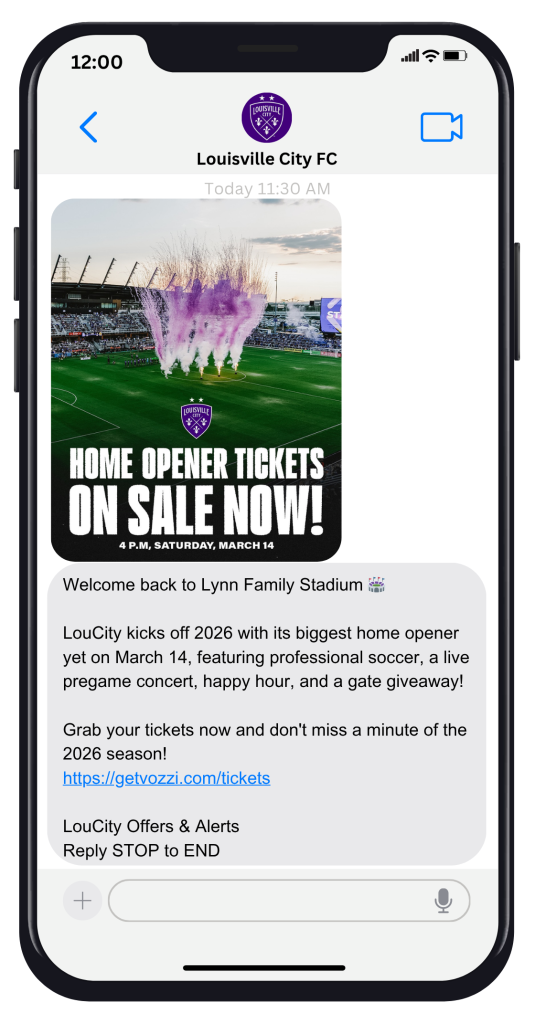
They’re tied to a clear revenue outcome.
Whether it’s ticket sales, renewals, or donations—messages that ask the fan to do something now are consistently outperforming general engagement sends.
What this looks like:
How to apply it:
If a message doesn’t have a clear action tied to revenue, rethink it.
The best-performing campaigns make the next step obvious—and easy.
We’re seeing a strong pattern: messages tied to a specific moment outperform everything else.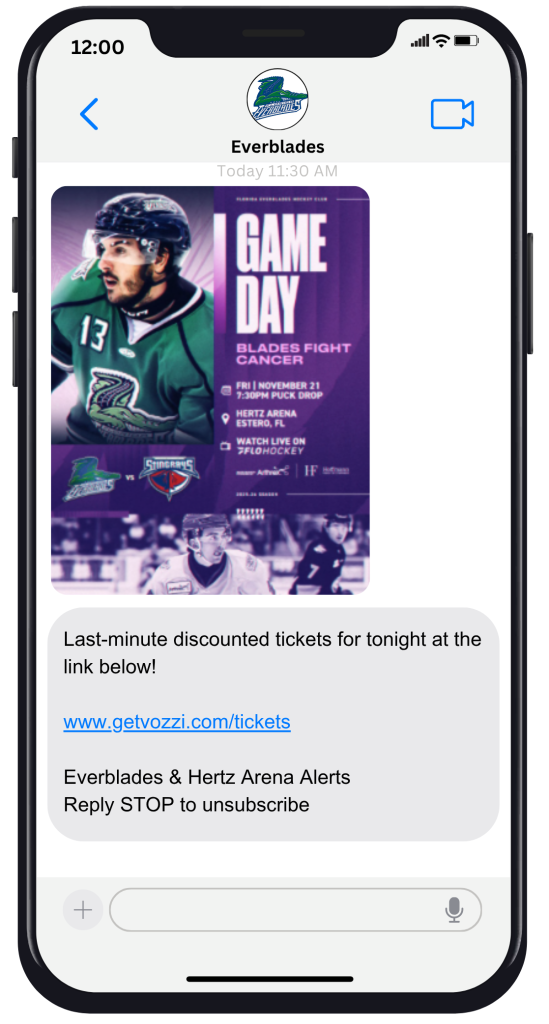
That includes:
Over half of high-performing campaigns include urgency-based language like:
What this looks like:
How to apply it:
Anchor your message to a moment.
Then layer in urgency to drive immediate action.
Teams that align messaging with key moments in their season are seeing stronger 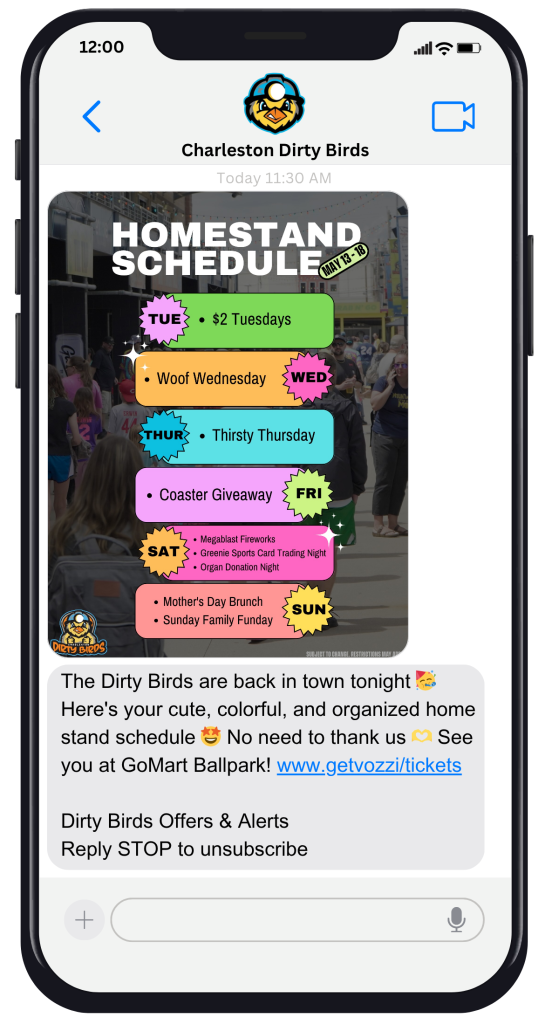 results.
Right now, that includes:
What this looks like:
How to apply it:
Don’t treat SMS as a standalone channel.
Tie it directly to your calendar—and use it to amplify moments that already matter to fans.
The highest-performing messages aren’t the most creative or broad.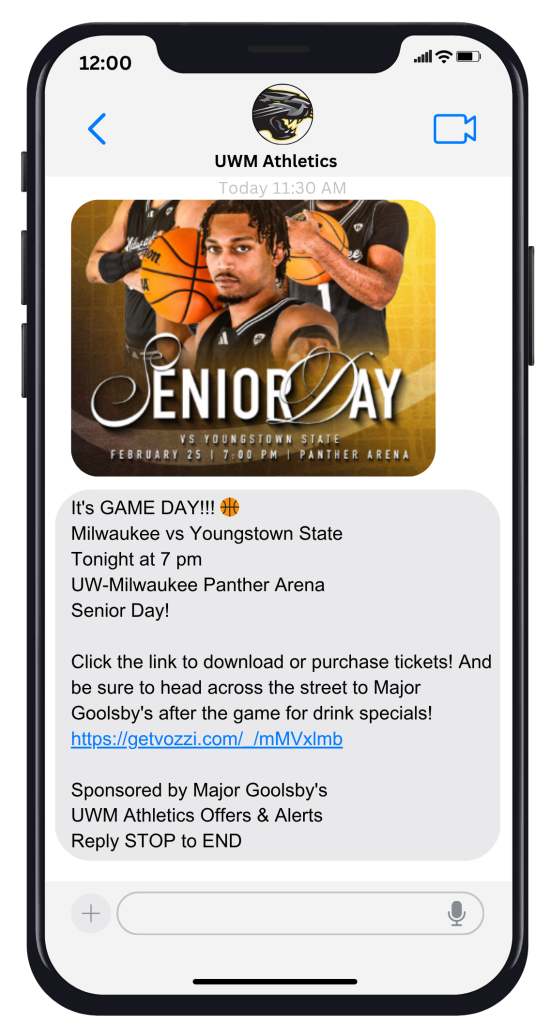
They’re the most clear and targeted.
Across campaigns, we’re consistently seeing:
Even with personalization and advanced tools, the core principle holds:
👉 Clarity and intent drives conversion.
What this looks like:
How to apply it:
Before you send a message, ask:
If yes—you’re on the right track.
We’re also seeing consistent patterns in how teams are using emojis to increase engagement and click-through rates.
Across campaigns:
What this looks like:
How to apply it:
Use emojis to reinforce the message—not replace it.
The best-performing campaigns use them to:
👉 One emoji is usually enough. Keep it intentional.
The teams seeing the best results right now aren’t doing more.
They’re doing the right things consistently:
That’s where SMS becomes a true revenue channel—not just a communication tool.
If you’re looking to turn your SMS strategy into a measurable revenue driver, we can help.
Book a demo or reach out to see how teams are applying these exact strategies to drive ticket sales, renewals, and more.